 Made in the USA
Writing from the lab bench.
Neutral, research-focused explainers on the peptides, methods, and handling practices that make experimental work reproducible.
All articles
10 posts
How HPLC and Mass Spectrometry Verify Peptide Purity
An overview of the two analytical workhorses — HPLC and mass spectrometry — and how together they confirm a research peptide's purity and identity.
Lyophilization: Why Research Peptides Are Freeze-Dried
How freeze-drying works and why lyophilization is the standard method for stabilizing and shipping research peptides.
Reconstituting Research Peptides: A Lab Primer
The core principles of reconstituting lyophilized research peptides — solvent choice, technique, and handling — for laboratory use.
Peptide Storage and Stability
What degrades research peptides and how proper storage — temperature, moisture control, and handling — preserves their integrity over time.
In Vitro vs In Vivo Research Models
The difference between in vitro and in vivo research models, what each reveals, and why studies often progress from one to the other.
Amino Acids, Peptides, and Proteins: The Structural Hierarchy
How amino acids, peptides, and proteins relate — a clear explanation of the structural hierarchy that underlies all of them.
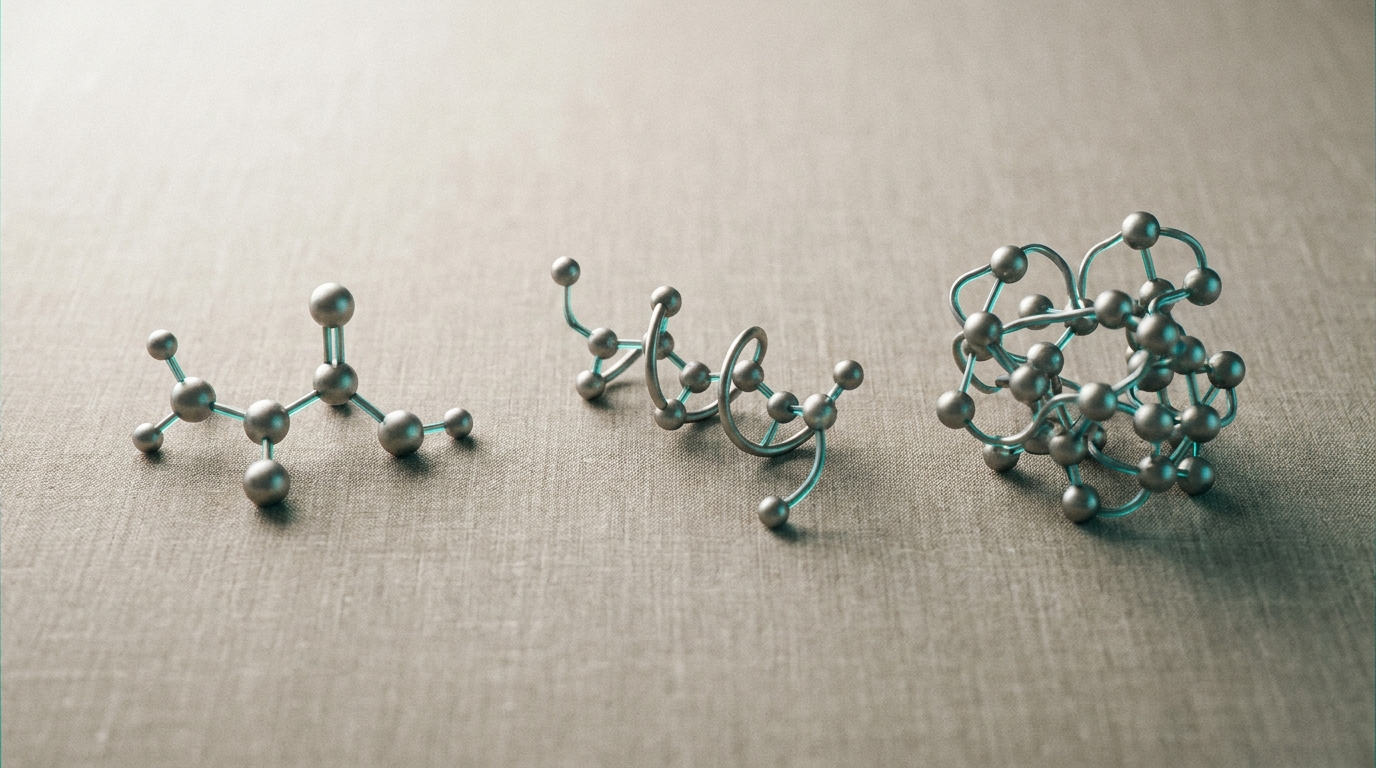
How to Read a Certificate of Analysis (COA)
A section-by-section guide to reading a peptide certificate of analysis, so you know exactly what the document is telling you.
GHK-Cu: A Research Overview
A neutral, research-focused overview of the copper peptide GHK-Cu — its structure, its history in the literature, and how it is studied in vitro.
BPC-157: What the Literature Describes
A research-focused look at the peptide BPC-157 — its origin, its structure, and how it appears in the experimental literature.