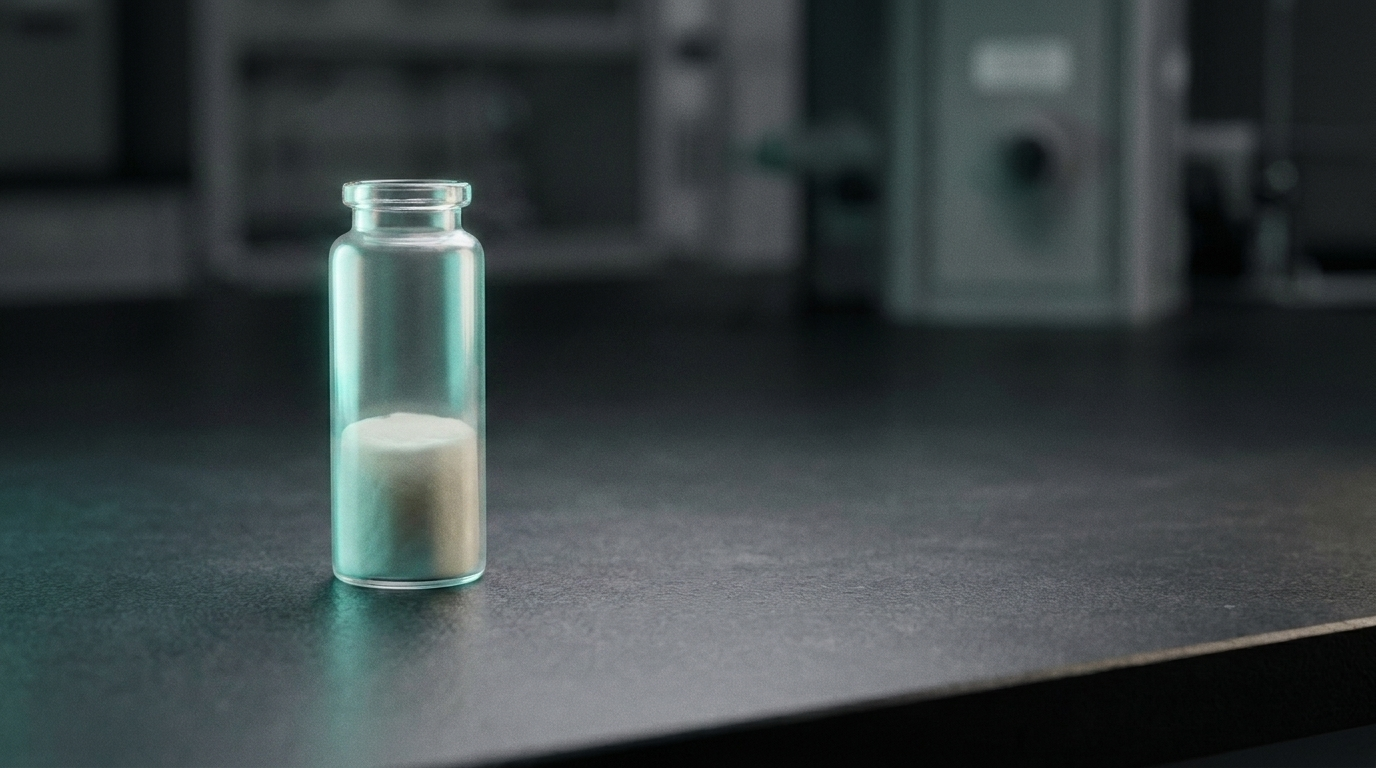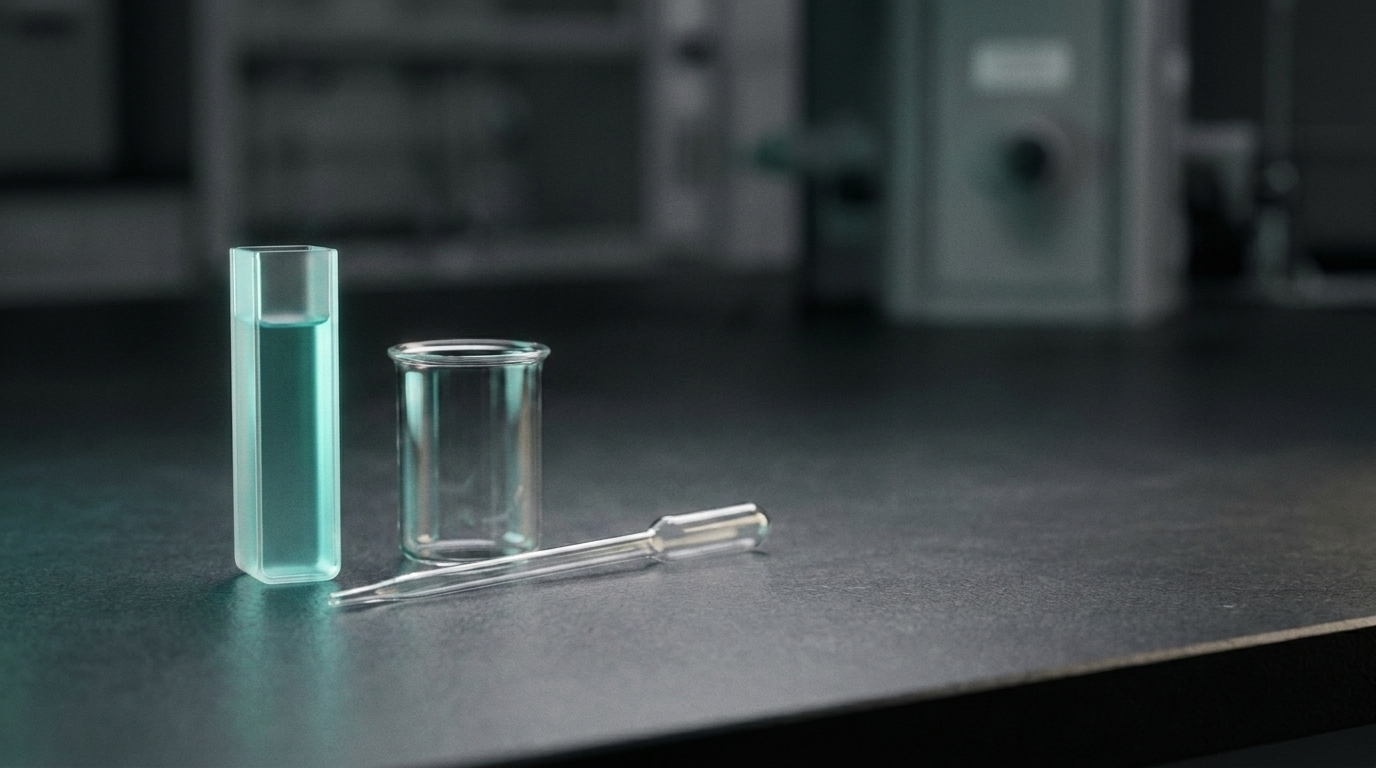

A lyophilized peptide has to be returned to solution before it can be studied. This step, reconstitution, is simple in concept but easy to get wrong, and errors here quietly undermine everything downstream.
The starting point is solvent choice. The appropriate diluent depends on the peptide's chemistry — its solubility, charge, and sensitivity. Sterile or bacteriostatic water is common for many sequences, but some peptides require a mild acid, a base, or a small fraction of an organic co-solvent to dissolve fully. The right choice is dictated by the compound, not by habit, so the supplier's characterization data is the reference to consult.
Technique matters as much as the solvent. Solvent should be added slowly and allowed to run down the inner wall of the vial rather than being injected directly onto the peptide cake. Aggressive mixing — vigorous shaking or vortexing — can shear and denature sensitive sequences; gentle swirling and patience are preferred. Dissolution can take a few minutes, and the solution should be inspected to confirm the material has gone fully into solution without cloudiness or undissolved particles.
Concentration should be planned before opening the vial. Knowing the peptide mass and the target concentration lets you calculate the exact solvent volume, which keeps experiments reproducible from vial to vial.
Finally, reconstituted peptides are less stable than their dry form, so any solution should be handled and stored appropriately and used within a sensible window. Reconstitution is best treated as the moment a durable, shelf-stable material becomes a time-sensitive one.